Shopify DotDev in Toronto made one thing clear: AI is changing how customers discover, compare and buy products. It is not, however, removing the need for a compelling storefront or sound commercial judgement. If anything, it is making both more valuable.
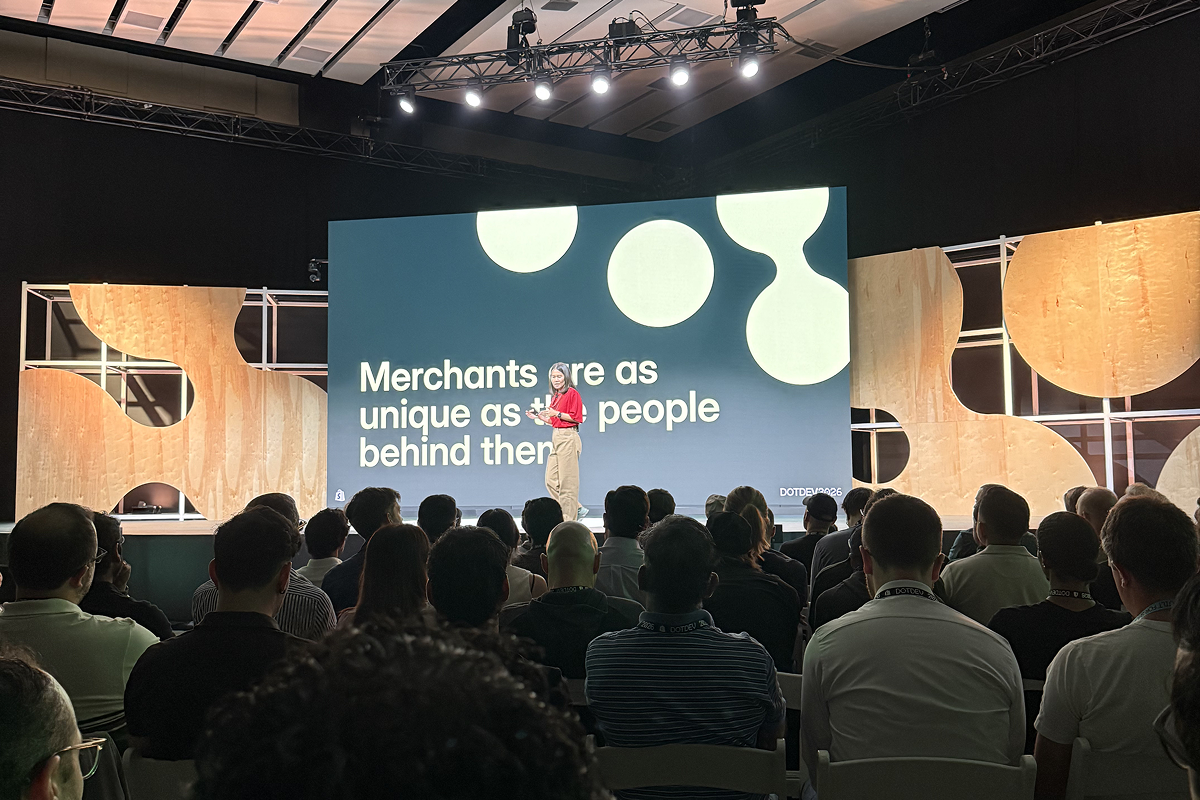
Hericlis Martins, our Engineering Lead, and I travelled to Toronto for Shopify's annual gathering of the developers, agencies, technology partners and product teams building its ecosystem.
We arrived with an ambitious session list covering everything from Universal Commerce Protocol and AI discovery to customer accounts, payments and B2B. Some rooms filled before we could get through the door. That turned out not to matter.
The recordings would be available later. The people would not.
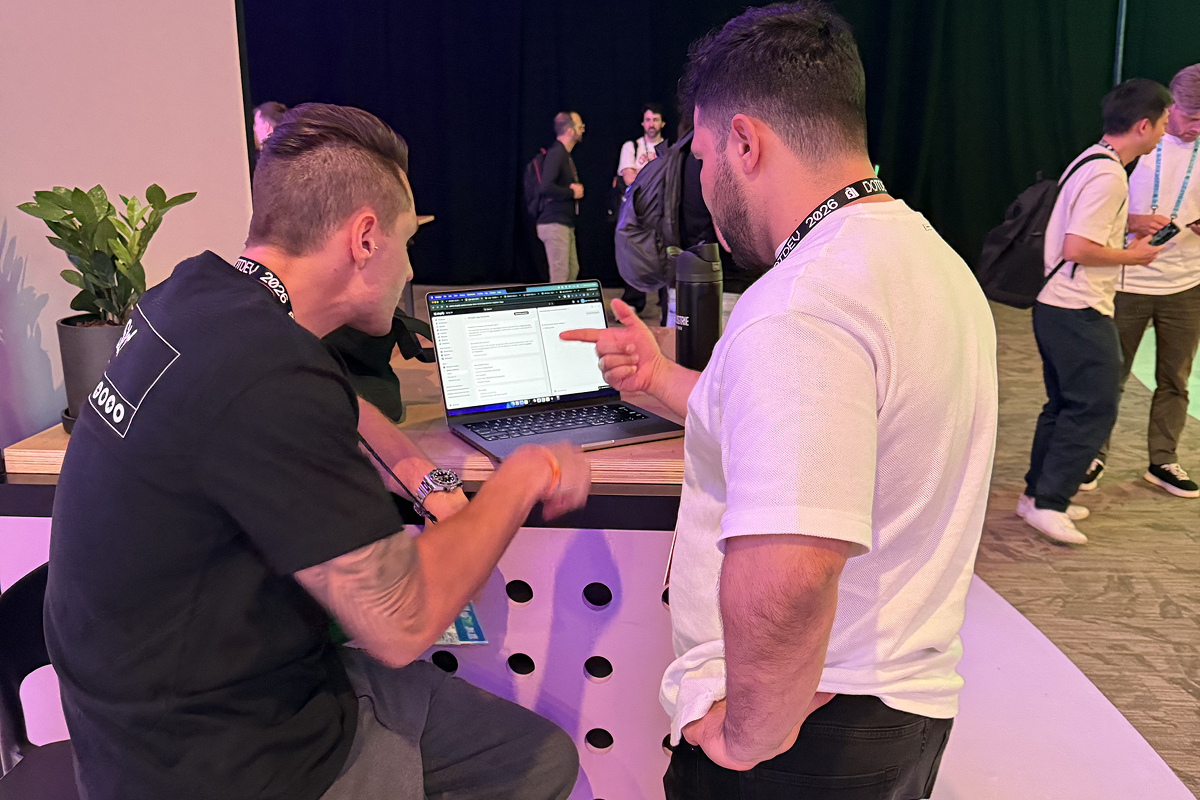
The most useful parts of the week often happened on the product floor, where we could show senior Shopify team members what we are working on, ask direct questions and get candid feedback. Just as valuable were the conversations with agency owners and technology partners from around the world who are solving many of the same merchant problems in different markets.
And that shaped our biggest takeaway from DotDev:
The opportunity is not to chase everything Shopify is shipping. It is to understand how the pieces connect, decide which changes matter to your business and act before experimentation becomes panic.

Agentic commerce has moved from headline to architecture
Agentic commerce is often explained as shopping through a chatbot.
That’s part of it, but it misses the bigger shift.
The more important shift is architectural. Shopify is building infrastructure that allows AI agents and other shopping experiences to help customers discover products, compare options and move towards purchase without the journey necessarily beginning on a merchant’s website.
Two parts of that architecture appeared throughout DotDev:
- Shopify Catalog gives AI agents structured access to product information, either across Shopify's global catalogue or within a single merchant's store.
- Universal Commerce Protocol, or UCP, gives agents a shared way to negotiate capabilities and move through discovery, cart and checkout.
Together, they create the foundations for commerce across more surfaces than a website or marketplace. Shopify is building the infrastructure, while partners can build specialist shopping experiences for particular communities, categories and use cases.
For merchants, the technical details matter less than the commercial implication:
Your next customer may discover your product, compare it with competitors and narrow their consideration set before they ever see your homepage.
In the main stage keynote, Shopify shared early data suggesting AI-driven sessions were converting around 80% better than organic search, with roughly half landing directly on a product page.*
If that behaviour continues, the traditional ecommerce journey becomes less predictable.
Customers won’t necessarily move neatly from an ad or Google result to your homepage, through a collection and onto a product page. They may arrive much deeper in the funnel with a product already in mind.
That has implications for everything from product data to merchandising, UX and conversion strategy.

AI discoverability starts with catalogue discipline
This was the most important merchant implication of DotDev, and one of the strongest themes in the wider industry conversation. If AI is going to recommend your products, it needs to understand them first.
That makes something many ecommerce teams still treat as housekeeping essential:
Product data is becoming sales infrastructure.
An agent can only confidently recommend a product when it understands what it is, who it is for and whether it meets the customer’s requirements.
That depends on accurate and consistent titles, descriptions, categories, variants, materials, dimensions, ingredients, compatibility, care information, availability, pricing and fulfilment information.
And the challenge becomes more interesting in categories where people don’t buy purely on specifications.
Electronics can often be compared through fairly objective attributes. Fashion, beauty, home and lifestyle products are more likely to involve subjective considerations such as occasion, comfort, fit, formality, aesthetic or personal preference.
Merchants need to make enough of that context understandable to machines without turning every product description into generic, AI-optimised copy that sounds exactly like everyone else.
Shopify’s Spring ’26 release includes an Agentic Storefronts view in admin for eligible stores, designed to help merchants understand how products are performing across AI channels and identify where information could be improved. Availability currently varies between channels, with some integrations still in early access.
That’s an important shift.
AI readiness is moving out of innovation workshops and into everyday merchandising.
For most merchants, the right starting point isn’t a major new AI project. It’s a focused catalogue audit.
Ask:
- Are the attributes that genuinely influence purchase decisions present and consistently structured?
- Do product descriptions answer the questions customers actually have, or simply repeat supplier language and internal terminology?
- Are variants, availability, pricing, delivery and returns accurate across the systems feeding Shopify?
- Can your highest-value products be understood using the language, needs and use cases customers actually search for?
You don’t need to solve your entire catalogue overnight.
Start with the products attracting the most demand, generating the most revenue or creating the most friction. Improving a meaningful part of your catalogue is more valuable than designing a perfect data model that never reaches the customer.
The storefront matters more, not less
If AI does more of the early discovery work, it is tempting to think the storefront becomes less important. We came away believing the opposite.
An AI agent might help a customer narrow down thousands of products to the handful most relevant to them. It might even send them directly to a product page.
But the customer’s next question is still very human:
Do I trust this brand enough to buy from them?
That decision is influenced by the quality of the product page, speed, visual storytelling, social proof, delivery information, returns, brand credibility and dozens of small signals that make an experience feel considered.
AI might help determine what someone wants to buy.
Your brand still has to give them a reason to buy it from you.
The strongest ecommerce experiences therefore need to work on two levels.
One gives machines accurate, structured information they can understand.
The other gives people a distinctive, useful and trustworthy experience.
AI may shorten the journey to a product, but it also raises the standard at the point of handoff.
We saw a useful example of this thinking at Nosto Partner Day. Jewellery brand Jenny Bird shared how it had moved beyond manually curated recommendations and started testing different forms of personalisation across its Canadian and US stores.
One collection-page experiment comparing recently viewed products with bestsellers reportedly delivered a 6% conversion lift.*
By connecting customer segments with the onsite experience, the brand could also carry relevant context into navigation imagery, announcement bars and homepage content.
The interesting part wasn’t personalisation for its own sake.
It was the discipline behind it: use customer context, keep the journey coherent, test the experience and retain what demonstrably improves it.
Shopify is changing beneath the AI headlines too
UCP and AI discovery attracted plenty of attention at DotDev, but some of the quieter platform changes could have a more immediate impact on merchant roadmaps.
Shopify’s new Collections model, for example, brings automated conditions, manual selections, exclusions, sub-collections, variant-level logic and app-owned sources into a more composable model.
For merchants managing large or complex catalogues, that has the potential to mean more precise merchandising with less manual maintenance and fewer workarounds.
Customer accounts are also evolving beyond a purely post-purchase utility.
Branded sign-in, longer sessions and expanded discovery opportunities make the account experience another potential place to support service, loyalty and conversion. For merchants still relying on heavily customised legacy accounts, migration should be considered as part of the wider customer journey rather than treated as a box-ticking platform upgrade.
For development teams, the Events platform, expanded app analytics and the July '26 developer preview of Liquid blocks and partials point in the same direction: a more composable and observable platform that is easier for people and coding agents to work with. Some capabilities remain in preview, so they belong in planning conversations rather than immediate rebuild briefs.
The broader direction, however, is worth paying attention to.
AI changes the economics of building, not the need for strategy
The agentic shift is happening behind the storefront too. Sidekick is moving further into analytics, theme editing, segmentation and automation, while AI-assisted development is accelerating software delivery.
That changes the economics of some build decisions, but it does not make every custom idea sensible.
Merchants should revisit the familiar choice between native Shopify capability, a specialist app and a focused custom build. Code that was once prohibitively expensive may now be practical. At the same time, a mature app may still be cheaper and safer once support, edge cases, compliance and ongoing maintenance are included.
The comparison also needs to include the cost of waiting: delayed roadmap items, manual work, slow pilots and missed opportunities while a known problem remains unresolved.
The Tobi Lütke and Harley Finkelstein fireside reinforced the importance of ambition and the systems required to realise it. The main-stage keynote made a related point: as code becomes more democratised, data, taste and distribution are likely to endure. AI may change the economics of execution, but it does not remove the need for judgement or clear strategic choices.
What merchants should do now
DotDev showed both production-ready capability and a direction of travel. A sensible response is neither to ignore it nor to overhaul the roadmap around every announcement.
- Strengthen the data behind your most important products. Audit completeness, consistency, accuracy and customer language. Treat the product page and the underlying data model as one conversion system.
- Review the high-intent landing experience. Assume more shoppers will arrive directly on a product or collection page. Make the value proposition, trust signals, availability, delivery, returns and next action clear without requiring a homepage visit.
- Map the rules that must survive across channels. Pricing, discounts, bundles, availability, localisation, fulfilment and returns need to work when the journey begins somewhere other than your storefront.
- Reassess the stack with a commercial lens. Identify where Shopify now offers a capable native option, where a specialist app still creates advantage and where a focused build could remove a costly constraint. Separate what is available now from what is still in preview.
- Give agentic commerce an owner and a measure. Someone needs to be accountable for product data quality, emerging AI channels, testing and the customer experience at the handoff. Start with a small number of meaningful measures rather than a broad innovation programme.
Why being in the room still matters
Our clearest personal takeaway was that attending DotDev is not about collecting as many workshop badges as possible.
The session content can be replayed. The chance to put our work in front of senior Shopify team members, ask precise questions and get candid feedback cannot. Nor can the relationships built with agencies and partners from other parts of the world.
That matters for Process, but it also matters for our clients.
Better advice comes from understanding not only what has been announced, but how the platform is being built, how technology partners are responding and where other merchants are encountering friction.
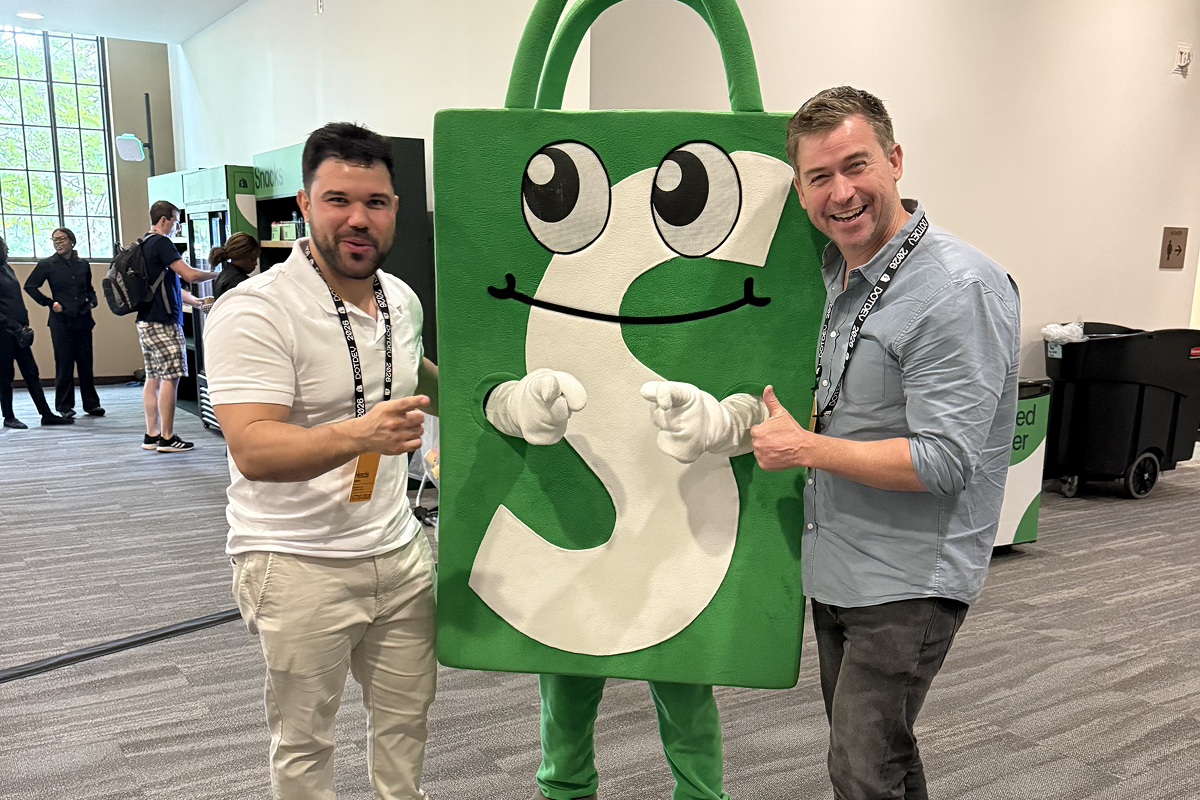
The week ended with Shopify closing Princes' Boulevard for a huge block party shared with its internal Summit. After days spent talking about agents, APIs, architecture and the future of commerce, the DotDev community and Shopify staff finished the week outside together. It was a fitting reminder that even in an agentic future, relationships still move the industry forward.
The biggest takeaway from Toronto
Agentic commerce will change where shopping journeys begin and how much of the decision is made before a customer reaches a storefront.
It will not remove the fundamentals of commerce.
The merchants best placed to benefit will be the ones with product information that machines can understand, experiences that people can trust and a clear view of where technology creates real commercial value.
New capability does not create competitive advantage on its own.
Knowing what matters, making the right choices and executing them well does.
If you want a practical view of what the DotDev announcements mean for your Shopify roadmap, get in touch with our team. We can help you work out what’s useful now, what’s worth preparing for and where the biggest opportunities sit for your business.