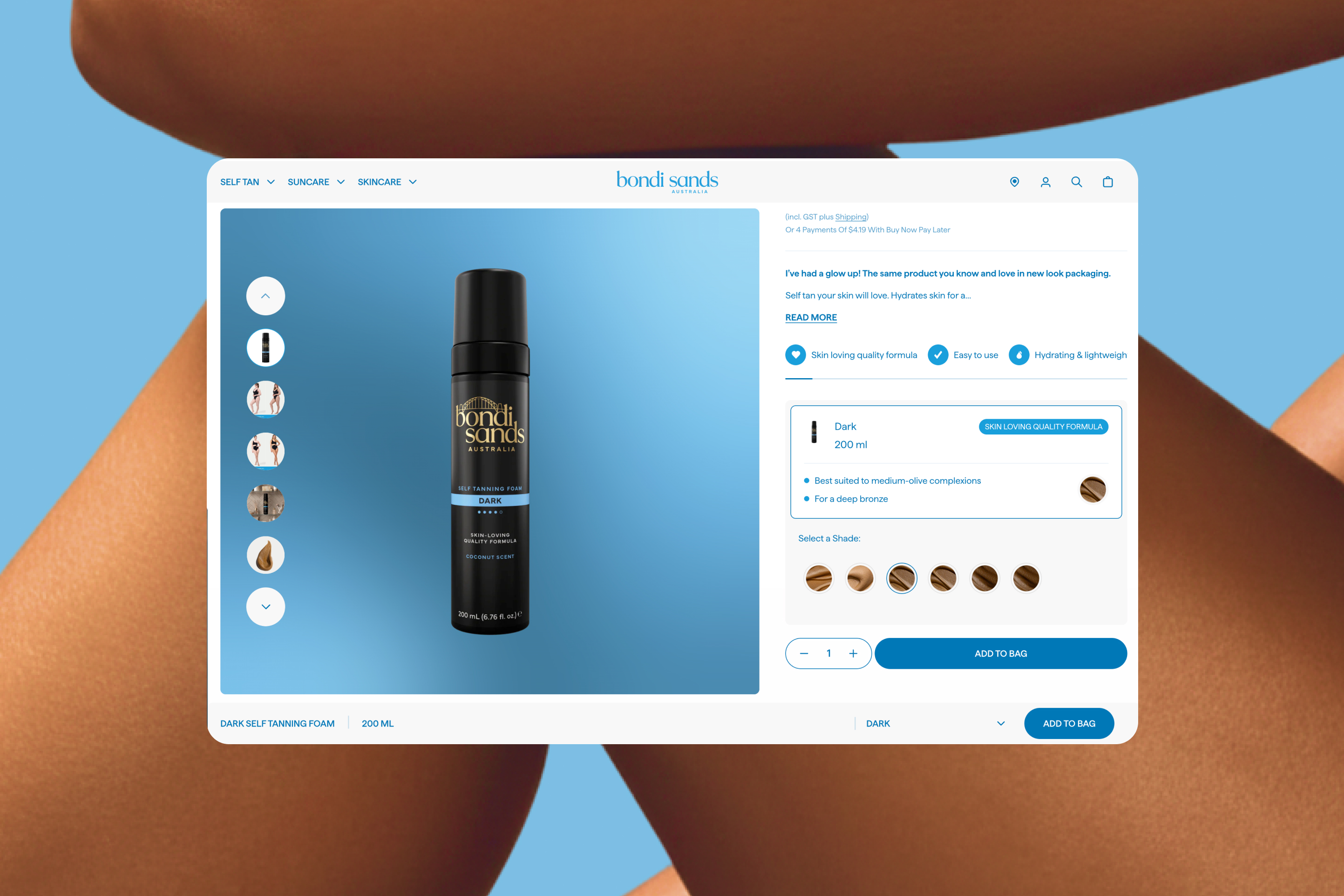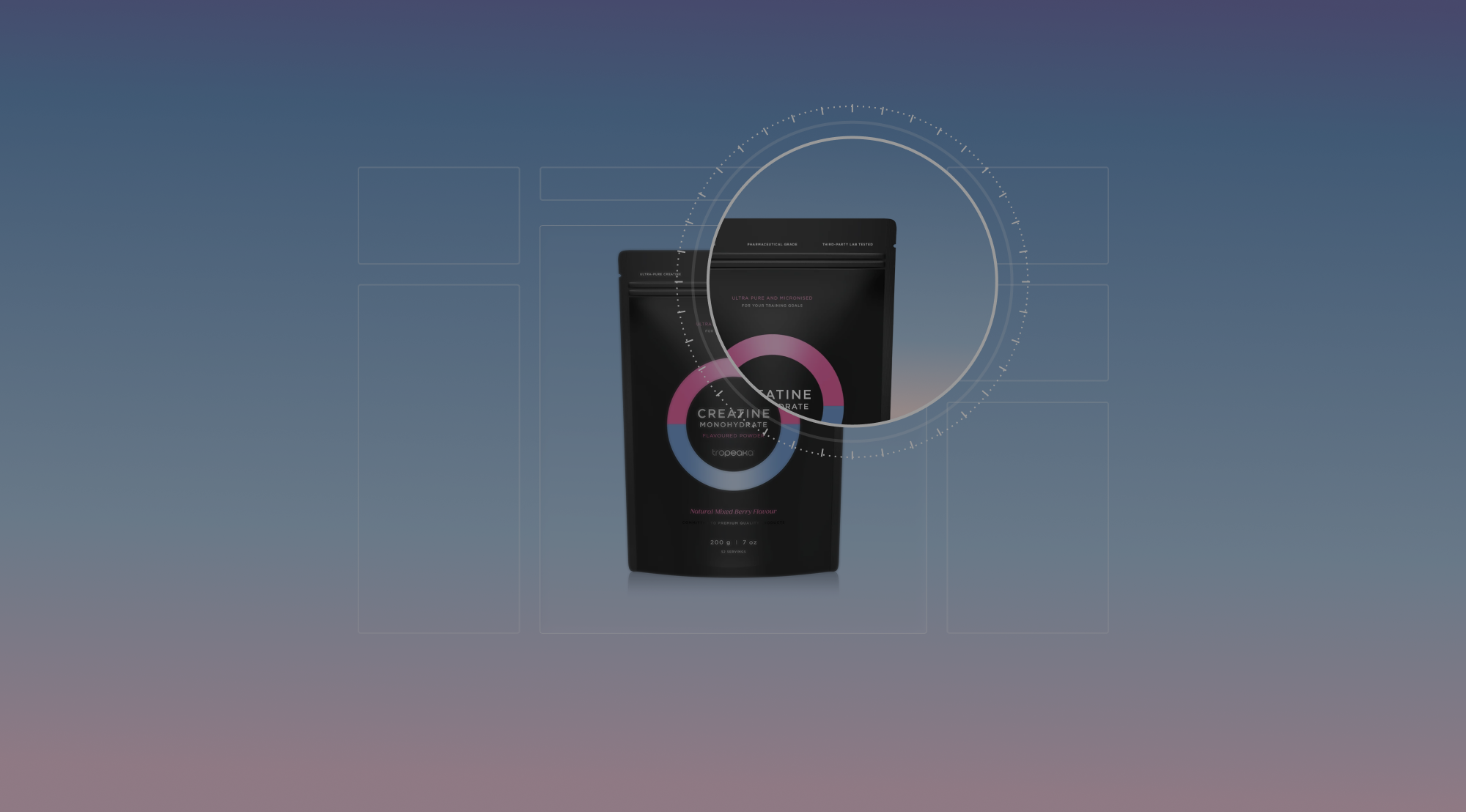
Some of the biggest customer experience problems in a large ecommerce store aren't really UX problems.
They're data problems.
Filters that don't surface the right products. Search results that miss obvious matches. Recommendations that require constant manual merchandising. Product pages with inconsistent information. Teams maintaining spreadsheets and workarounds just to keep everything connected.
For established ecommerce brands, these problems tend to build gradually.
Thousands of SKUs are added over time. Product information comes from different suppliers and systems. Naming conventions change. Metafields multiply. Categories get reworked. New markets introduce new requirements.
Eventually, the catalogue that powers the customer experience becomes harder to manage than anyone intended.
Think of it as product data debt.
Like technical debt, it doesn't necessarily stop your store from working. But as it accumulates, it limits what you can do with it.
And now there's another reason to pay attention: AI is changing how products can be discovered and understood.
The quality of your product data isn't just an operational concern. It influences the experiences you can create for customers today and could become an increasingly important part of how products are understood by search engines, shopping platforms and AI systems.
It's an area we've been exploring with our partners at Product Pelican as another way to help the merchants we work with improve product discovery, reduce catalogue maintenance and get more value from the data already sitting within their Shopify stores.
So, how healthy is the catalogue sitting underneath your Shopify store?
1. Better product data creates better filtering and discovery
You can design a sophisticated filtering experience, but it's only as useful as the information powering it.
If one product is categorised as "navy", another "midnight", another "dark blue" and hundreds more don't have a colour attribute populated at all, there's only so much the frontend can do.
The same applies to material, fit, size, compatibility, style, use case and the many other attributes customers use to make decisions.
At scale, inconsistencies like these become a customer experience problem.
A shopper who can't narrow a large catalogue effectively has to work harder to find the right product. And when finding the right product becomes difficult, even great interface design can only compensate so far.
Strong taxonomy and consistently structured product attributes give your search, filters and navigation better information to work with.
The real outcome isn't cleaner data.
It's helping customers find the right product faster.
And the value of getting this right extends well beyond the storefront.
Consistent, accurate product data feeds almost every part of the sales funnel, from organic search and emerging AI discovery through to Google Shopping, marketplaces and other sales channels.
That makes improving catalogue data an investment that compounds.
The same work that creates better filtering and navigation can also give the platforms distributing and interpreting your products better information to work with.
It's also one of the problems Product Pelican is designed to tackle, using AI and automation to generate and enrich the data that feeds Shopify's and Google's product taxonomies.
For large catalogues, it offers a way to maintain that level of structure without relying on ecommerce teams to manage every field manually.
2. Better product relationships create better merchandising
Cross-sells, upsells, bundles and recommendations can all make a shopping experience more useful.
Maintaining those relationships across thousands of products is another story.
"Complete the look" recommendations, compatible accessories, alternative colours, product sets and complementary items can quickly become a significant manual merchandising task, particularly when products are constantly entering and leaving the catalogue.
Structured product relationships give ecommerce teams a stronger foundation for merchandising at scale.
This is one area our partners at Product Pelican are tackling with Product Stitching, which helps identify and connect relationships between products across a Shopify catalogue.
For customers, better relationships can create more relevant paths between products.
For ecommerce teams, it can reduce the amount of catalogue maintenance required to create them.
3. Better information answers customer questions earlier
Great product pages reduce uncertainty.
Does it run true to size? Is it compatible with another product?
What's the difference between these two models? Can it be used outdoors? How should it be cared for?
For established retailers, the answers often already exist somewhere within the business.
The problem is getting that knowledge into a consistent, useful format across thousands of products.
Structured attributes, metafields and product FAQs can turn that information into something customers can actually use.
It also creates richer context around each product, which becomes particularly relevant when we start thinking beyond the storefront.
Because your customers aren't the only ones trying to understand what you sell.
FAQs are a particularly practical opportunity here. They give customers useful answers at the point of consideration while creating additional structured, relevant content around the product.
Historically, creating useful FAQs across thousands of products would have been a significant content exercise. AI changes the economics of that.
With the right source information and oversight, relevant product FAQs can now be generated and maintained at a scale that would be difficult to achieve manually.
There's an emerging discovery benefit too. Product Pelican recently demonstrated this with Vittoria Coffee, where newly created FAQ content began appearing within Google's AI-generated summaries within days.
It's a useful example of the bigger shift happening in product content.
You're no longer creating information solely for the customer reading the PDP. You're also creating context that search engines and AI discovery systems can use to better understand the product.
4. AI discovery makes product data more important
There's no shortage of discussion around AI, GEO, AEO and agentic commerce right now. Strip away the acronyms and there's a much simpler idea worth paying attention to: Machines need enough information to understand what you're selling.
Consider the difference between a traditional product search:"black travel jacket"
and a customer asking an AI assistant:
"I need a lightweight black jacket for a three-week trip through Europe. Something smart enough to wear to dinner, but easy to pack and unlikely to crease."
The second query contains far more context and intent.
Now consider what your catalogue says about the product.
If it's essentially: Black Jacket Polyester $189
there isn't much information available to determine whether it's a good match.
Material, weight, fit, features, care requirements, use cases and other relevant attributes all provide additional context about what that product actually is.
That doesn't mean populating more metafields will suddenly get your products recommended by ChatGPT. No platform or app can credibly guarantee that.
It does mean that accurate, descriptive and well-structured product information gives the systems interpreting your catalogue more context to work with.
And that's why we think a lot of the conversation around AI discovery ultimately comes back to something much less futuristic: Good product data.
AI hasn't made the fundamentals of ecommerce irrelevant. It's given us another reason to get them right.
For merchants wanting to go deeper into how AI product discovery is evolving, Product Pelican has published a useful breakdown of what they're seeing across the emerging AI shopping landscape.
5. How healthy is your catalogue?
Before adding another AI strategy to the roadmap, it's worth understanding the state of the catalogue you already have.
Take a representative sample across categories, brands, product types and catalogue age.
Then ask:
- Are products consistently assigned to the right taxonomy?
- Are important attributes structured, or buried inside descriptions?
- Are category metafields consistently populated?
- Do similar products use consistent terminology?
- Can customers filter by the attributes that genuinely influence their purchase?
- Are related and complementary products connected?
- Do product images have meaningful alt text?
- Are common product questions answered?
- Are core fields such as SKUs and barcodes complete?
- Is there a noticeable difference in data quality between older and newer products?
And increasingly, there's another useful question: If a customer clearly described what they wanted to an AI shopping assistant, does your catalogue contain enough information for your product to be understood as a potential match?
You don't need an arbitrary "AI readiness score" to start improving that.
You need to know where the gaps are.
6. The challenge is fixing it at scale
Identifying catalogue problems is relatively easy.
Fixing them across 10,000, 20,000 or 50,000 products is not.
Writing alt text for 20 images is an afternoon task. Doing it across 40,000 images is an operational project.
The same applies to taxonomy, metafields, FAQs, product relationships and inconsistent product information.
This is where AI and automation can become genuinely useful.
Not as a replacement for ecommerce strategy or merchandising judgement, but as a way to handle repetitive, data-heavy work that doesn't make sense for a team to tackle manually.
It's also where Product Pelican fits into the picture.
Built specifically for Shopify, Product Pelican helps merchants audit and enrich large product catalogues, tackling areas such as taxonomy, category metafields, product and collection content, image alt text, FAQs and product relationships.
Rather than adding AI for the sake of it, the value is in applying it to an existing operational problem: keeping large catalogues accurate, structured and useful as they evolve.
Because catalogue quality isn't a one-off clean-up project.
New products arrive. Categories evolve. Markets launch. Customer behaviour changes. Shopify introduces new capabilities.
And now the ways products are discovered are changing too.
Build a better foundation for what comes next
For years, ecommerce optimisation has focused heavily on the layer customers can see.
Better UX. Better navigation. Better search. Better merchandising. Better product pages.
All of that still matters.
But increasingly sophisticated customer experiences need increasingly good information underneath them.
Strong product data gives customers better ways to navigate complex catalogues. It gives ecommerce and merchandising teams stronger foundations to work with. And it gives Shopify, search engines, sales channels and emerging AI experiences clearer information about what you're selling.
For enterprise merchants with large, complex catalogues, maintaining that level of detail manually isn't realistic.
That's what makes Product Pelican relevant. It applies AI to a problem ecommerce teams already have, rather than inventing a new one.
And before you start fixing anything, it helps to know where the gaps are.
Product Pelican offers a free Shopify catalogue audit to identify opportunities to improve your product data and catalogue health.
Run your free Product Pelican catalogue audit →
An exclusive offer for Process clients
If you're a Process client and want to take the next step, Product Pelican is offering an extended free trial and a complimentary strategy call to merchants who mention this article.
It's an opportunity to dig into your catalogue, understand where the biggest opportunities sit and see what better structured product data could unlock across your Shopify store.
Good product data isn't just backend housekeeping.
It's part of the customer experience you're creating today, and a stronger foundation for whatever comes next.