From AI-driven product discovery to smarter merchandising, coordinated campaigns and better customer data, Shopify's latest release brings some significant opportunities for ecommerce brands. Here's what merchants should be paying attention to.
Shopify has unveiled its Fall '26 Edition, Exponential, introducing another substantial collection of updates across its commerce platform.
While AI continues to dominate the conversation, some of the most commercially valuable announcements are less about artificial intelligence itself and more about the problems merchants have been trying to solve for years: disconnected systems, manual processes, fragmented customer experiences and the difficulty of making meaningful improvements without adding complexity.
For established ecommerce brands, that's where this release gets interesting.
Shopify is bringing more functionality into the platform itself, giving merchants greater control over how they manage product data, coordinate campaigns, understand customer behaviour and optimise the shopping experience.
We've reviewed the announcements and selected nine updates we believe deserve particular attention, focusing on what they mean for merchants and how they could influence the way ecommerce businesses operate and grow.
1. Your Next Customer Might Never Visit Your Website
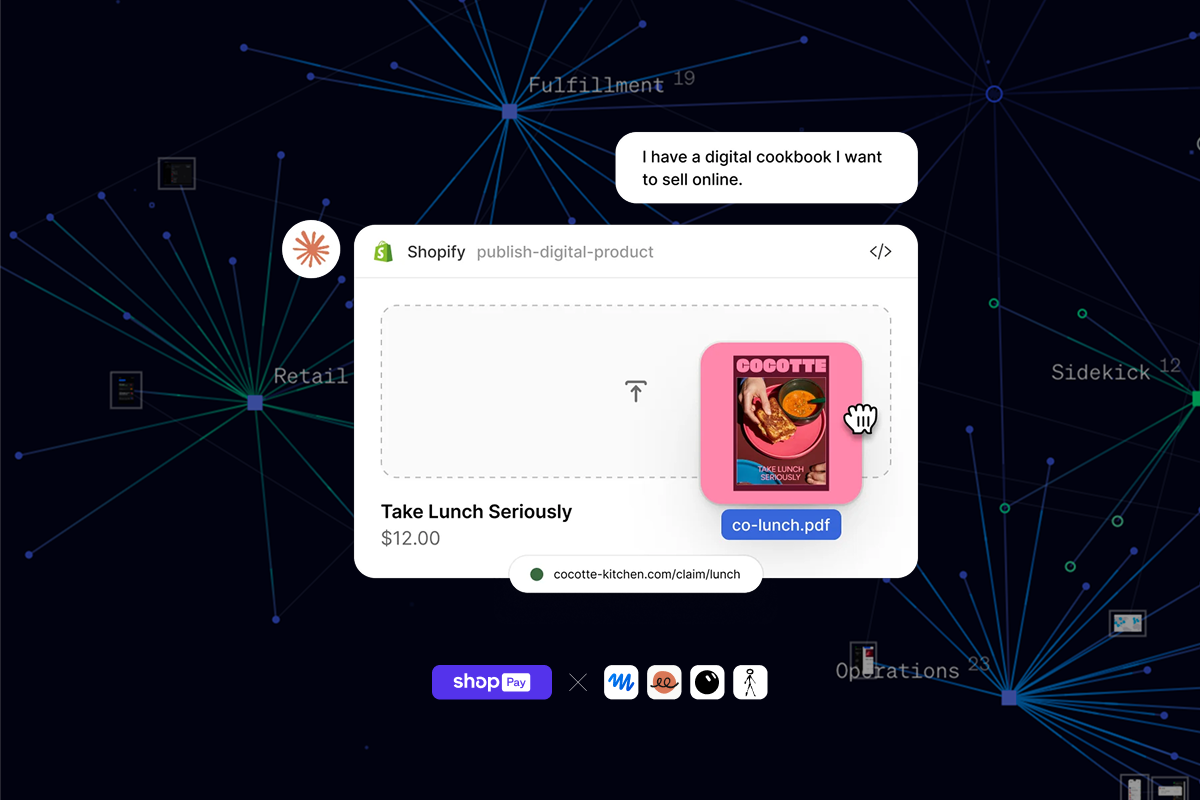
Shopify update: Shop skill for any agent / Sell in Google Search, including AI Mode, and the Gemini app / Your business details in AI channels
AI-powered shopping is moving beyond product recommendations towards experiences where customers can discover, compare and purchase products without following the traditional journey through a brand's website.
Shopify's Fall '26 release expands the infrastructure supporting this shift. Its new Shop skill enables compatible AI agents to access product discovery, recommendations and Shop Pay checkout capabilities, while further integrations are bringing Shopify-powered transactions into conversational shopping environments. Selling in Google AI Mode and Gemini now includes stores that sell to Australian customers, although Shopify says it is still rolling out and it needs a Google Merchant Center account.
Shopify has also introduced greater control over the business information shared with AI agents, allowing merchants to review and approve details such as policies, FAQs and other important store information.
Why it matters
For years, ecommerce optimisation has focused heavily on what happens after a customer lands on a website. As AI becomes another route to product discovery and purchase, brands also need to consider how their products are understood and represented before a customer reaches their store.
This introduces new considerations around product data quality, availability, pricing, brand information and the accuracy of the content AI systems can access.
A well-designed storefront remains essential, but it may no longer be the only environment influencing a customer's purchase decision.
What merchants should do
- Review product titles, descriptions, attributes and categorisation to ensure information is accurate and useful beyond the storefront.
- Check Shopify Catalog eligibility and address any issues preventing products from being included.
- Review the business information available to AI shopping agents, including policies and frequently asked questions.
- Monitor how customers discover your products through emerging AI shopping channels as reporting becomes available.
Key takeaway: AI shopping creates another opportunity to reach customers, but the quality and accessibility of your product information will play an increasingly important role in whether your products are discovered and recommended.
2. One Product Catalogue, Multiple Channels and Less Manual Work
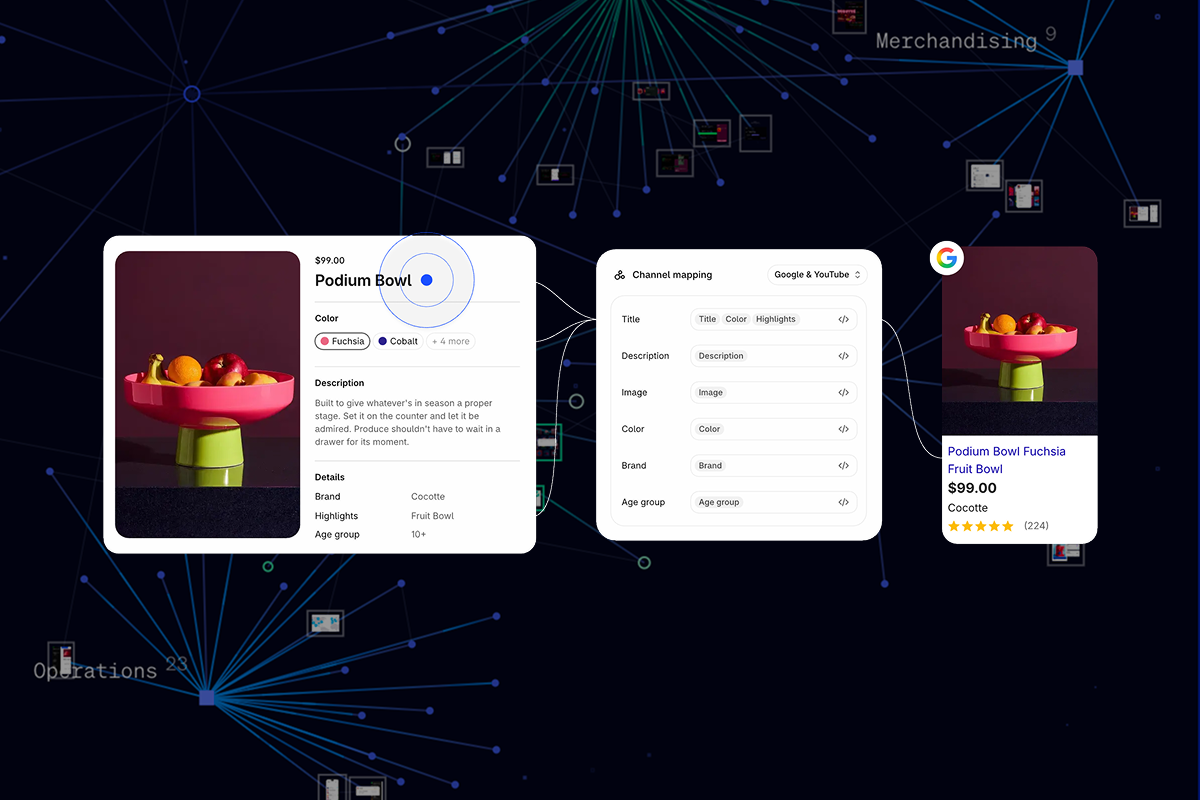
Shopify update: Product data mapping by channel / Multi-source product collections
Managing product information across multiple sales channels has traditionally involved a considerable amount of duplication, particularly for brands with large catalogues or complex merchandising requirements.
Shopify's new product data mapping functionality allows merchants to customise and map product information for different sales channels directly from the admin, with updates maintained as the underlying catalogue changes.
The release also introduces multi-source collections, allowing merchants to bring together products, variants and app-driven information within more flexible collection structures.
Why it matters
As brands expand into marketplaces, social commerce, AI shopping and international markets, maintaining accurate product information becomes increasingly complicated.
Different channels have different requirements, and managing these through separate feeds, spreadsheets or third-party integrations can create inconsistencies and unnecessary administration.
Bringing more of this functionality into Shopify offers an opportunity to simplify catalogue management while improving the quality and consistency of product information.
For larger merchants, this could also reduce reliance on some external processes, although more sophisticated product information management requirements may still warrant specialist systems.
What merchants should do
- Audit how product data currently moves between Shopify and your sales channels.
- Identify duplicated work, inconsistent attributes and integrations that require frequent manual intervention.
- Review whether native product mapping can simplify existing workflows.
- Consider how the new collection capabilities could support more sophisticated merchandising and product discovery.
Key takeaway: Better product data management isn't just an operational improvement. It supports more reliable product discovery, more consistent customer experiences and easier expansion into new channels.
3. Coordinated Campaign Launches, Without the Last-Minute Chaos
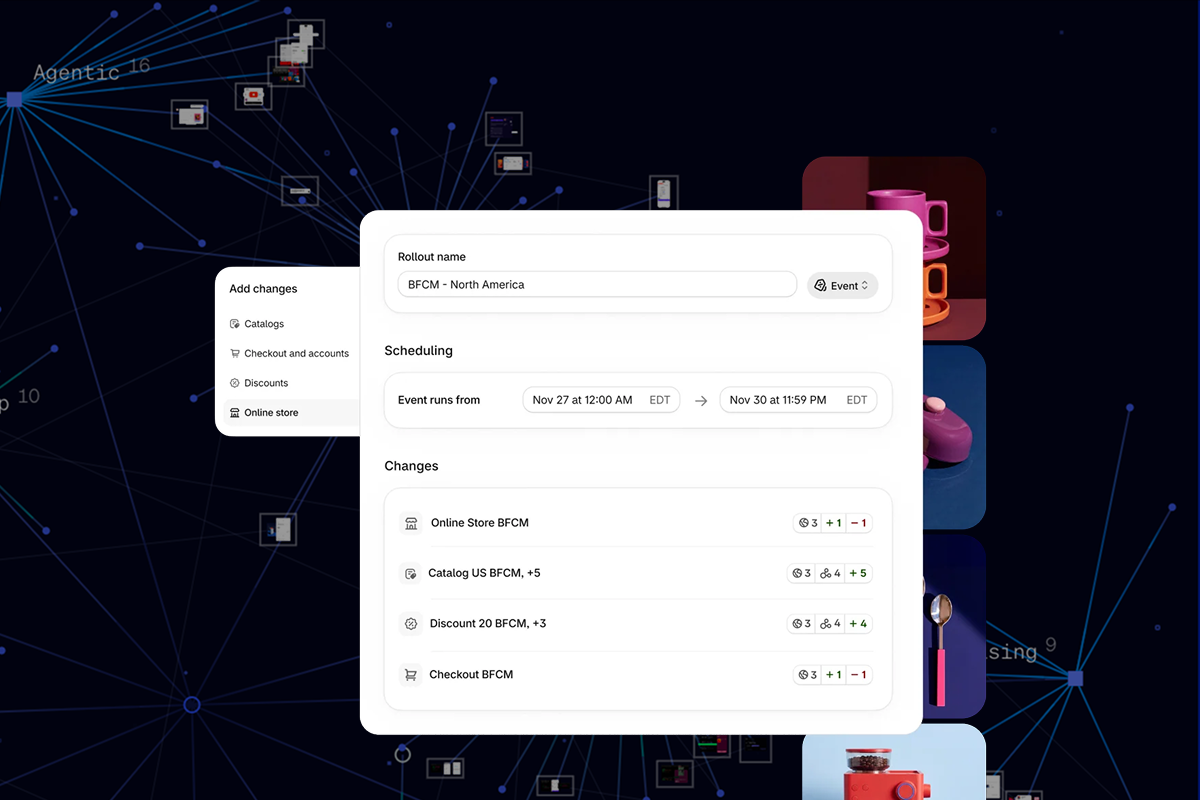
Shopify update: Clearer rollouts setup / Launch scheduled changes or A/B tests for elements of your store / Roll out discounts
Major ecommerce campaigns rarely involve changing just one element of a website.
A product launch, promotional event or seasonal campaign might require updated homepage content, revised pricing, new collections, checkout changes and promotional discounts, often coordinated across multiple teams.
Shopify's expanded Rollouts functionality is designed to bring these activities together.
Merchants can coordinate changes to themes, checkout configurations, catalogues and discounts within a single rollout, schedule when they go live and, where supported, automatically reverse promotional changes once an event ends.
Shopify has also expanded where full launches can reach, including headless storefronts, Shopify POS, Google Shopping and the Shop app. A/B tests still run on your online store only.
Why it matters
For established brands running frequent campaigns, the complexity of coordinating changes can become a significant operational burden.
Multiple systems, manual updates and last-minute deployments introduce unnecessary risk, particularly during high-traffic trading periods.
A more coordinated approach can reduce the number of moving parts involved in a launch, improve consistency across channels and give ecommerce teams more control over execution.
It also creates opportunities to test changes rather than relying entirely on assumptions about what will perform best.
What merchants should do
- Review the processes involved in your most recent major campaign or product launch.
- Identify where manual updates, duplicated work or dependencies between teams created delays.
- Assess which changes could be coordinated through Rollouts.
- Consider where structured experimentation could help improve future campaign performance.
Key takeaway: Better campaign coordination gives teams more time to focus on strategy and performance, rather than managing the mechanics of getting everything live.
4. Simulated Testing Before You Commit to a Change
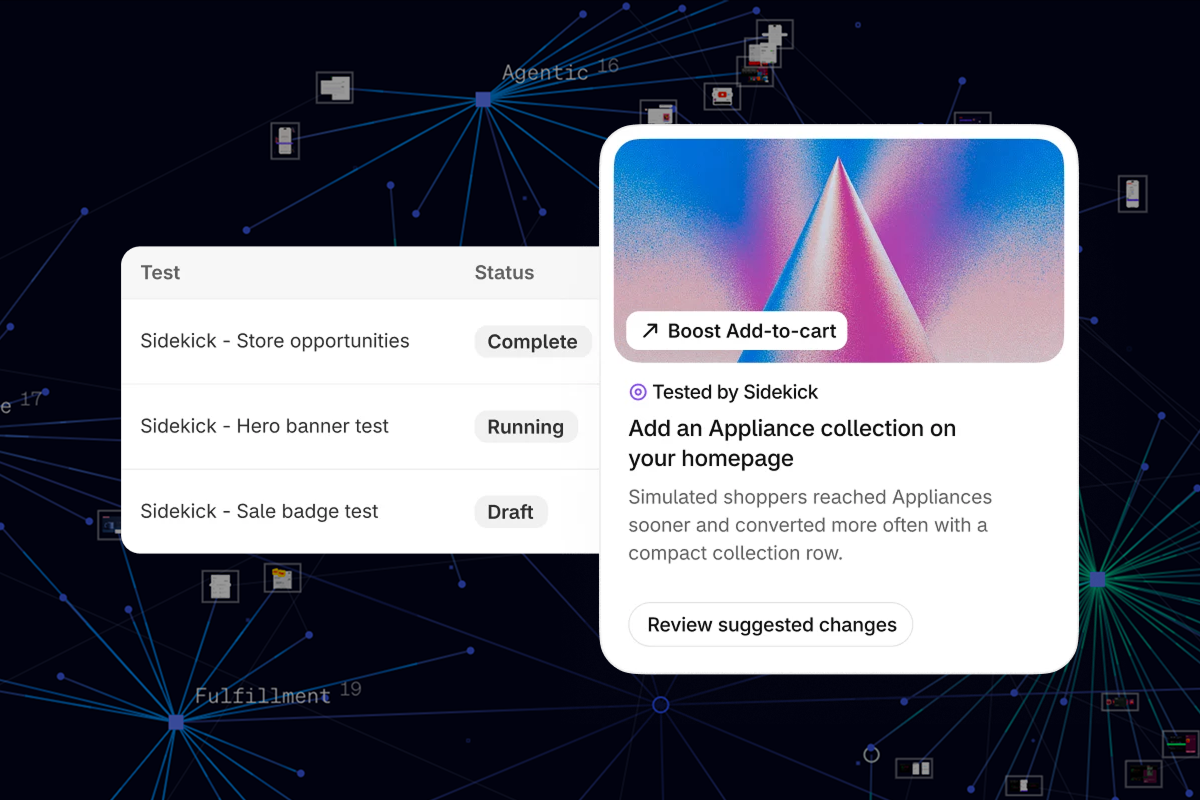
Shopify update: Recommendations tested by Sidekick / Set a shopping goal for your next SimGym simulation
One of the more interesting developments in Fall '26 is the closer connection between Shopify's AI assistant, Sidekick, and its simulated shopping environment, SimGym.
Sidekick can identify potential store improvements and use SimGym to test recommendations before presenting them to merchants for review. For now this covers desktop theme changes aimed at add-to-cart rate, for some stores with recent sales.
Merchants can also set specific shopping goals for simulations, helping them explore how changes to the shopping experience might influence customer behaviour.
Rather than simply suggesting an improvement, Shopify is moving towards a workflow where potential changes can be explored and evaluated before implementation.
Why it matters
Ecommerce teams have no shortage of ideas for improving their stores. The challenge is knowing which changes deserve development resources and which are likely to deliver meaningful results.
Simulation offers another way to investigate potential improvements before committing to implementation.
However, simulated shopping behaviour isn't a substitute for testing with real customers. Results still need to be interpreted in the context of actual customer data, brand positioning and commercial objectives.
For merchants with established experimentation programmes, these tools could become useful for prioritising hypotheses before moving into live A/B testing.
What merchants should do
- Identify areas of the shopping experience where there is a clear performance problem or opportunity.
- Use simulations to explore potential solutions and inform test prioritisation.
- Compare recommendations with actual analytics, customer feedback and behavioural data.
- Continue validating important changes through live experimentation wherever practical.
Key takeaway: AI-assisted simulations could help ecommerce teams make more informed decisions about what to test, but real customer behaviour should remain the measure of success.
5. A Smarter Way to Help Customers Find the Right Product
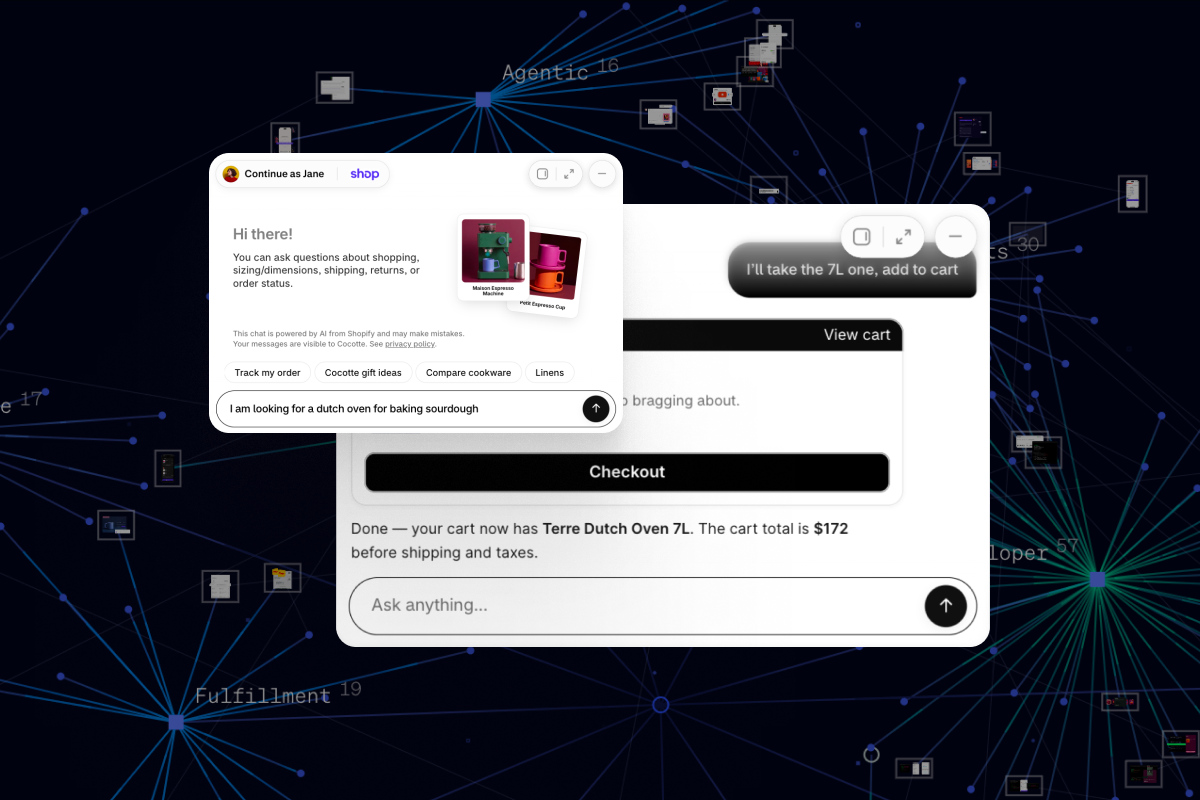
Shopify update: A smarter storefront agent
Shopify has expanded the capabilities of its storefront shopping assistant through Shopify Inbox, allowing customers to receive personalised recommendations, ask questions and begin checkout from a conversation.
The experience is designed to help customers move from product discovery towards purchase without navigating through multiple pages to find the information they need.
It also provides a pathway to human support when additional assistance is required.
Why it matters
For brands selling products that require research, comparison or guidance, answering the right question at the right moment can make a significant difference to the shopping experience.
Customers may need help understanding product compatibility, choosing between variations, finding the correct size or identifying the most suitable product for their needs.
Traditionally, these interactions have relied on navigation, filters, educational content or customer service teams.
A more capable storefront assistant could complement these experiences by making relevant information easier to access.
The opportunity is particularly interesting for brands with large product ranges, technical products or more considered purchasing journeys.
What merchants should do
- Review the most common pre-purchase questions received by customer service teams.
- Identify where customers struggle to find or compare products.
- Ensure product information, FAQs and support content are accurate and sufficiently detailed.
- Evaluate whether conversational assistance improves product discovery and conversion without compromising the brand experience.
Key takeaway: The opportunity isn't simply to add another AI feature to your website. It's to remove friction from the buying journey by helping customers make more confident purchasing decisions.
6. One Cart, Multiple Brands: Shopify Expands the Checkout Experience
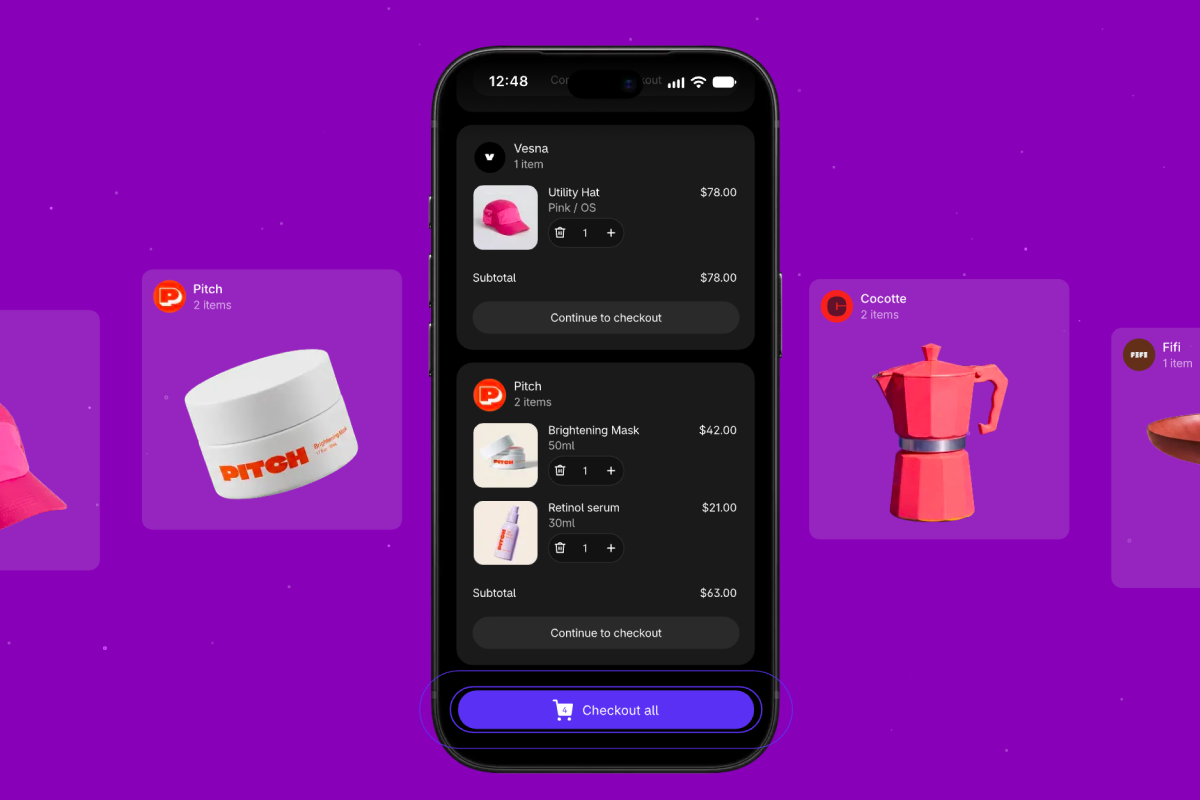
Shopify update: Universal checkout on Shop / Carts in Shop sync to online store
Shopify is expanding the role of Shop beyond order tracking and individual brand discovery.
With universal checkout, customers can add products from multiple brands to a single cart and complete their purchase through one checkout experience. For now this happens inside the Shop app.
Shopify is also introducing greater continuity between Shop and individual online stores, allowing customers' carts to follow them between these environments.
Why it matters
Customers increasingly move between channels, devices and brands as they research and purchase products. Every time they're required to restart their journey, find products again or re-enter information, another opportunity for friction is introduced.
Universal checkout and synchronised carts are designed to make those transitions easier.
For merchants, the potential benefit is a more convenient purchasing experience, particularly when customers discover products through Shop rather than arriving directly on a brand's website.
However, it also reinforces an important consideration: as more transactions take place through shared commerce environments, brands need to think carefully about how they maintain their identity, customer relationships and post-purchase experience.
What merchants should do
- Review how your products and brand are represented within Shop.
- Assess the opportunities for product discovery outside your primary storefront.
- Consider how customer retention and post-purchase communications work when transactions originate through different channels.
- Monitor whether Shop contributes incremental customers and revenue rather than simply shifting existing purchases between channels.
Key takeaway: Making it easier for customers to purchase across channels creates opportunities for conversion, but brands still need to build meaningful customer relationships beyond the transaction.
7. Better Visibility Into What's Actually Driving Revenue
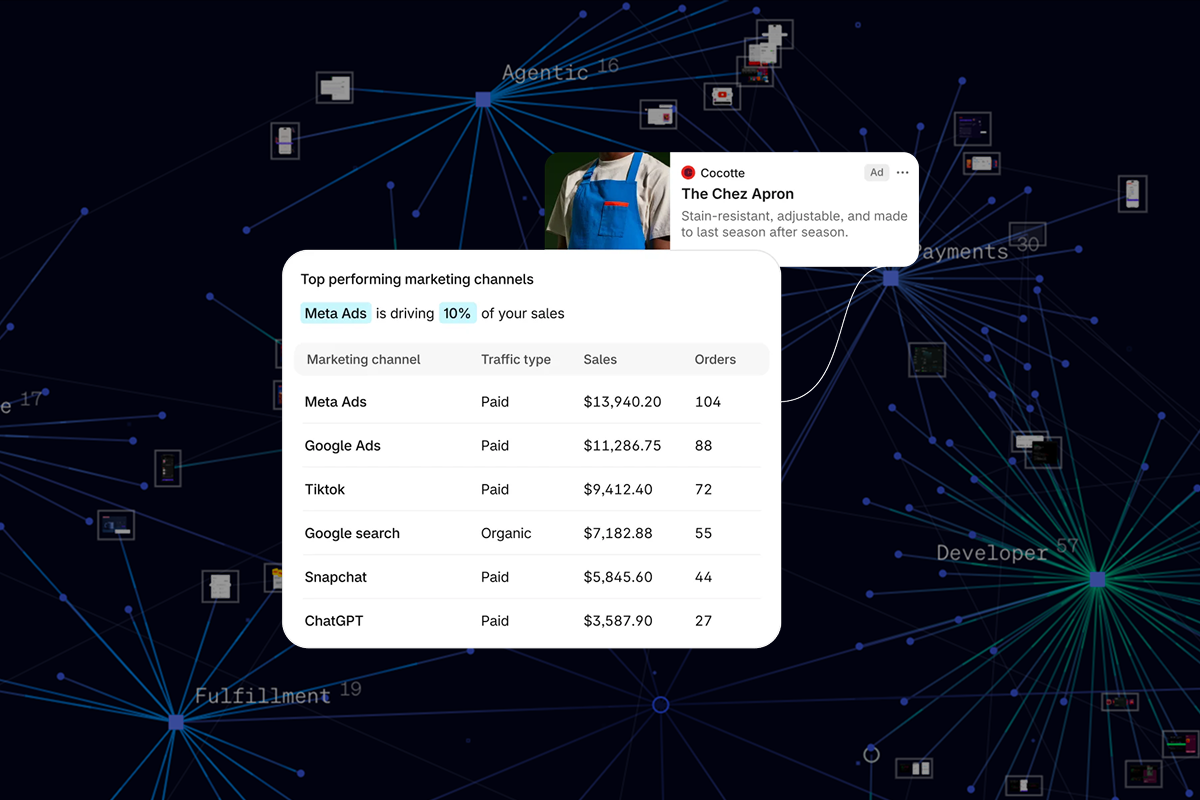
Shopify update: Unified marketing reports / Bring app events into analytics / Add your own annotations to analytics reports
Understanding which marketing activities genuinely contribute to revenue remains one of the more persistent challenges in ecommerce.
Shopify's Fall '26 release introduces improvements to marketing reporting, with clearer separation of traffic sources and changes designed to reduce attribution errors.
Merchants can also bring events from connected apps into Shopify Analytics, allowing activities such as loyalty redemptions or marketing emails to be analysed alongside store performance.
Additional reporting improvements include custom annotations, more flexible use of metafields and metaobjects, and geographic visualisations of sales performance.
Why it matters
Most established ecommerce brands rely on several platforms to understand performance, often with different attribution models and inconsistent reporting.
While these updates won't eliminate the complexities of marketing measurement, they could make Shopify's native reporting considerably more useful.
Bringing app activity into the same reporting environment as ecommerce performance creates opportunities to investigate relationships that have traditionally required separate tools or manual analysis.
For example, merchants may be able to explore how loyalty activity relates to purchasing behaviour or better understand performance across different product attributes and customer segments.
The opportunity is to move beyond reporting what happened and develop a clearer understanding of what contributed to it.
What merchants should do
- Review which marketing and customer engagement metrics currently sit outside Shopify.
- Identify app events that would provide meaningful context alongside revenue and conversion data.
- Compare Shopify's updated reporting with your existing analytics and attribution platforms.
- Establish consistent reporting definitions before making decisions based on differences between systems.
Key takeaway: More connected reporting can help merchants make better commercial decisions, provided the underlying data is reliable and the metrics are interpreted correctly.
8. Less Campaign Administration, More Time for Strategy
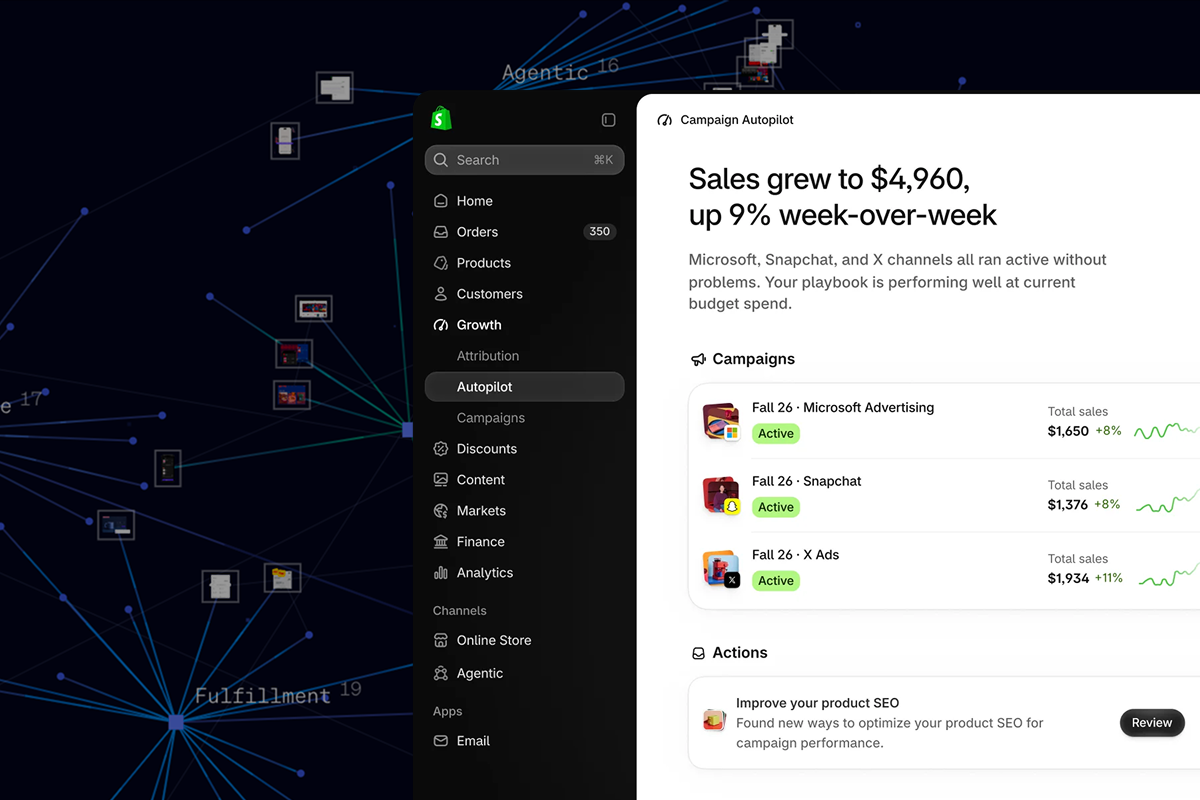
Shopify update: More of your marketing automated / Over 35 new markets for Shop Campaigns
Shopify is extending its marketing automation capabilities through Campaign Autopilot, introducing support for additional advertising channels, including Microsoft Advertising and Snapchat, with X Ads listed as coming soon.
The functionality brings more campaign activity into Shopify, including AI-assisted campaign management and SEO-related tasks.
Shop Campaigns is also expanding into more than 35 additional markets, including Australia, the UK and European markets, providing eligible merchants with additional opportunities to acquire customers through performance-based campaigns.
Why it matters
Managing customer acquisition across multiple channels requires ongoing attention to campaign setup, optimisation, reporting and budget allocation.
For ecommerce teams already stretched across trading, merchandising and customer experience, reducing repetitive marketing administration could free up time for higher-value activities.
However, automation doesn't remove the need for a clear acquisition strategy.
Campaign performance still depends on factors such as product economics, customer lifetime value, creative quality and the ability to distinguish genuinely incremental revenue from sales that would have happened anyway.
For established brands, the value of these tools will depend on how effectively they complement existing marketing programmes.
What merchants should do
- Review where repetitive campaign management tasks consume the most time.
- Assess the eligibility and economics of Shop Campaigns in your target markets.
- Compare automated campaign performance against existing acquisition channels.
- Maintain clear oversight of budgets, profitability and customer acquisition costs.
Key takeaway: Marketing automation can make execution more efficient, but commercial strategy, creative thinking and performance measurement remain essential.
9. Reducing Fraud Without Adding Friction at Checkout
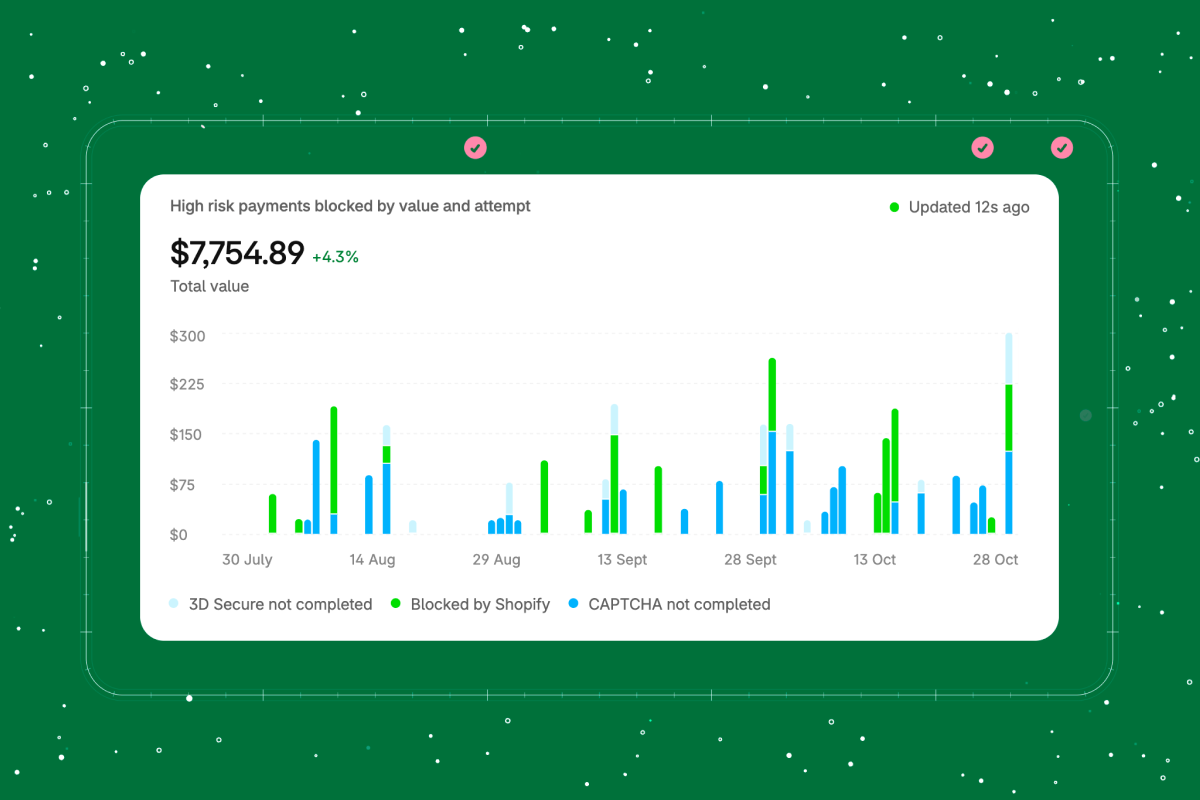
Shopify update: Stopping fraud across stores with Shopify Protect / Shopify automatically blocks high-risk orders / Get AI-generated responses for every chargeback
Fraud and chargebacks are more than administrative inconveniences. For high-volume merchants, they can represent a significant financial and operational cost.
Shopify is expanding its fraud prevention and dispute management capabilities, including functionality designed to identify and block high-risk payments before they become orders.
Shopify Protect brings these tools together. Automatic blocking of high-risk orders and AI-written chargeback responses come with Shopify Payments, while custom fraud rules and testing them against past orders sit in a separate paid app. Shopify's chargeback cover currently applies to US stores only.
Shopify is progressively rolling out these capabilities, with some features still marked as coming soon.
Why it matters
As transaction volumes increase, managing payment risk becomes more complex.
Merchants need to balance protecting revenue against avoiding unnecessary friction for legitimate customers. Overly restrictive fraud controls can create their own commercial problems if genuine purchases are declined or delayed.
More sophisticated risk assessment and automated dispute management could help reduce manual workloads while giving teams better information when deciding how to handle potentially fraudulent orders.
For brands operating internationally or processing high transaction volumes, these improvements warrant particular attention.
What merchants should do
- Review current fraud rates, chargeback costs and payment decline patterns.
- Assess which Shopify Protect capabilities are available and applicable to your store.
- Evaluate how proposed fraud rules could affect legitimate transactions.
- Monitor dispute outcomes and operational costs as new functionality becomes available.
Key takeaway: Better fraud prevention protects more than individual transactions. It helps safeguard revenue, reduce operational costs and maintain a smoother checkout experience for legitimate customers.
What Shopify Editions Fall '26 Really Means for Merchants
With so much new functionality being introduced, the challenge for established merchants isn't keeping up with every announcement. It's identifying which improvements will deliver genuine value to their business.
That means looking at where existing processes are creating inefficiencies, where customers are experiencing friction and which new capabilities could have the greatest commercial impact. Not every update will warrant immediate action, and some will require further testing before their value becomes clear.
At Process Creative, we help ecommerce brands make those decisions, combining strategic thinking with more than 14 years of Shopify expertise to turn platform capabilities into meaningful business improvements.
Want to understand which updates could make the biggest difference to your store?
Get in touch with the Process team to discuss the opportunities for your business.
Explore the full Shopify Editions Fall '26 release for all announced updates.