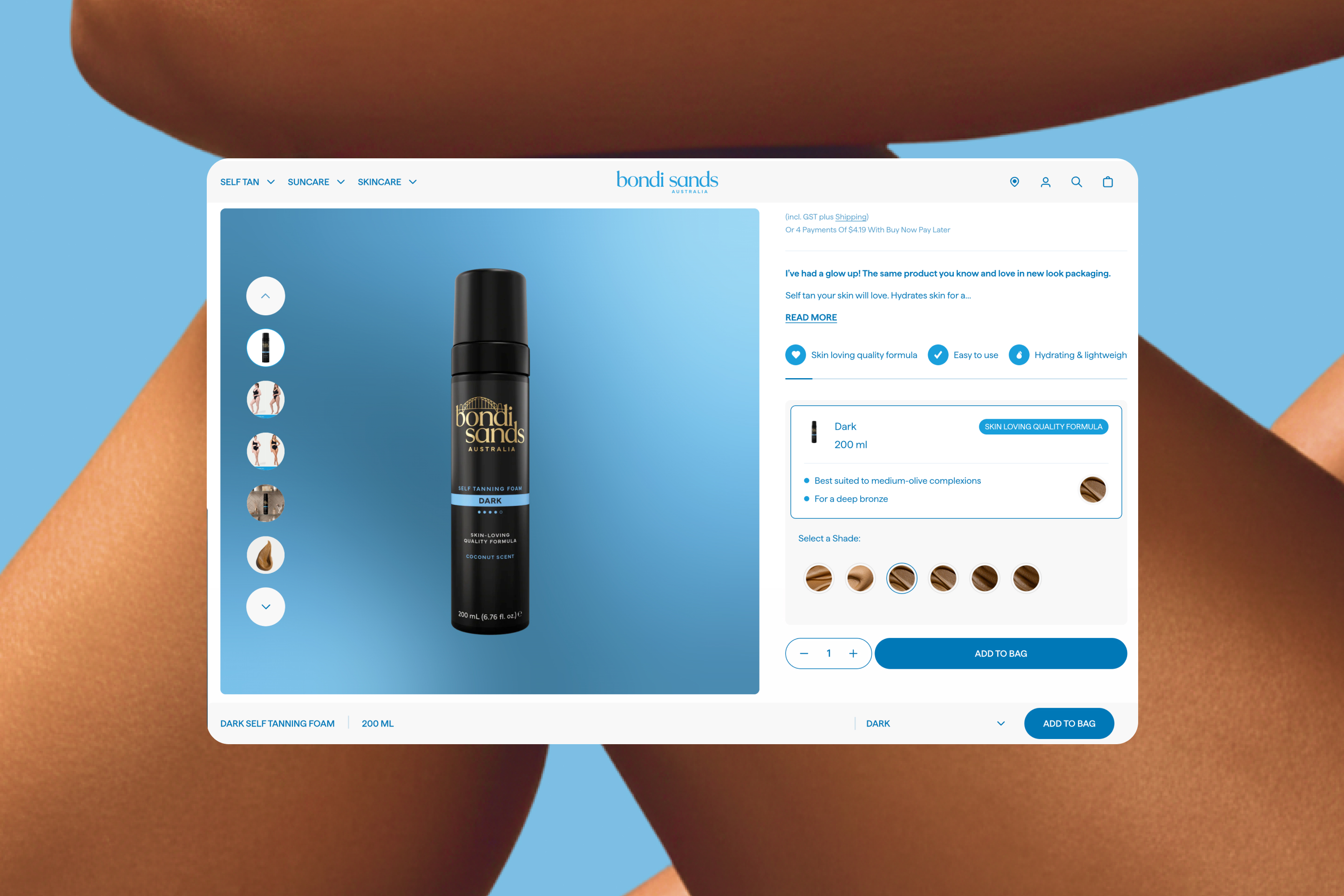
.jpg)
For a long time, product feeds lived quietly in the background of ecommerce. They powered Shopping ads, synced prices to marketplaces, and generally worked well enough to be ignored. That’s no longer the case. As product discovery becomes more automated, more algorithm-led, and more unified across platforms, product data is moving from a backend task to core growth infrastructure. For many brands, this shift is already creating friction—even if they haven’t identified the cause yet.
The shift happening beneath ecommerce teams’ feet
Product discovery used to be relatively simple. Customers searched, clicked an ad or category page, and explored a website. Today, discovery is both fragmented and unified at the same time, with products appearing across multiple platforms before a customer ever reaches your site. Products are now surfaced across:
- Google Search and Shopping
- Paid social catalogue ads
- Marketplaces
- Affiliate networks
- AI-driven recommendations and shopping experiences
What ties all of this together isn’t creative, bidding, or even your website—it’s product data. Recent developments like Google’s Unified Commerce Platform (UCP) don’t introduce this shift, but they make it visible by consolidating how product information is ingested and distributed. The result is a future where a single source of product truth fuels multiple discovery moments, fundamentally changing how brands compete.
Why ecommerce teams are feeling friction (without a clear cause)
Many growing ecommerce teams are experiencing performance issues that appear disconnected but are often linked beneath the surface. What looks like channel-specific problems is increasingly driven by shared data limitations. Common issues include:
- Products not appearing consistently across channels
- Paid performance plateauing despite strong creative and UX
- Slow turnaround when campaigns or merchandising priorities change
- Heavy reliance on developers for simple updates
- Inconsistent messaging between channels
These problems are often tackled in isolation—adjusting bids, refreshing creative, or reworking category pages. But increasingly, the root cause isn’t the channel—it’s the data those channels rely on. When product feeds are messy, inflexible, or fragmented across tools, performance issues compound quietly, reducing visibility, limiting relevance, and slowing down experimentation.
What product feed optimisation actually means
Product feed optimisation is about actively shaping how your product data is structured, interpreted, and distributed across platforms. Instead of being a passive output, your feed becomes a controllable performance lever. In practice, that means:
- Writing product titles and descriptions for algorithms—not just humans
- Structuring data so products are categorised correctly
- Controlling which products appear on which channels
- Creating channel-specific versions of product information
- Automating rules for sales, promotions, availability, or priority products
The goal isn’t simply to have feeds—it’s to make product data a lever you can pull, not a constraint you work around. A well-optimised feed improves visibility, relevance, and performance across every channel it touches.
From feeds to Unified Product Discovery
Feed optimisation becomes more strategic when viewed through the lens of Unified Product Discovery. This is the shift from channel-based discovery to a model where platforms interpret and surface products using a shared layer of structured data.
In this model:
- Discovery often happens before explicit intent
- Platforms decide what’s visible—not brands
- Data clarity and consistency directly impact performance
Search, Shopping, paid social, marketplaces, and AI interfaces are all drawing from the same underlying product data and increasingly making autonomous decisions based on it. That means product data is no longer just an input—it’s a signal that determines visibility, relevance, and ultimately performance.
What this means for ecommerce in 2026
Ecommerce is entering a phase where structured data, speed, and adaptability are as critical as creative and user experience. Several trends are accelerating this shift and reshaping how brands compete. These include:
- AI-led shopping and recommendation experiences continuing to grow
- Platforms relying more heavily on structured product data
- Manual, duplicated feed management becoming a bottleneck
- Speed and flexibility becoming key competitive advantages
In this environment, brands that treat product data as infrastructure—not admin—will move faster, test more effectively, and adapt with less friction. Feed optimisation may not feel exciting, but it will increasingly determine how visible and competitive a brand can be.
What “good” looks like in practice
Strong product data foundations are intentional. They enable teams to move quickly, maintain consistency, and adapt across channels without unnecessary complexity. For ecommerce teams, that typically includes:
- A centralised, flexible source of product data
- Clear ownership of feed strategy
- The ability to tailor product data per channel without rebuilding everything
- Tools and partners that reduce manual work and risk
This is where platforms like Athos Commerce (formerly Searchspring) are evolving—extending beyond onsite search and merchandising into feed management and optimisation.
Operationalising the shift
For most teams, the challenge isn’t recognising the shift—it’s operationalising it within existing systems and workflows. This requires rethinking how product data is managed, structured, and deployed across channels. As platforms like Google move toward unified ingestion models through UCP, structured product data becomes a shared layer across Search, Shopping, paid social, marketplaces, and emerging AI-led surfaces. To support this, ecommerce teams need to be able to:
- Centralise and govern product data clearly
- Tailor attributes and messaging by channel without duplicating effort
- Respond quickly to merchandising and campaign priorities
- Reduce reliance on manual fixes or developer intervention
This shift is also why traditionally onsite-focused platforms are expanding their remit. Tools like Athos Commerce are moving into feed management, reflecting the reality that product visibility no longer begins and ends on your website. If you want to go deeper, explore Athos’ ebook: “Driving Ecommerce Revenue Through Unified Product Discovery” , or talk to us about how we can help integrate this into your current platform.
The quiet competitive advantage
Product feed optimisation may not feel like a headline initiative, but it’s becoming one of the most important levers for sustainable growth as discovery continues to unify and automate.
- Visibility improves
- Relevance sharpens
- Teams move faster
- Growth becomes less dependent on constant creative reinvention
For brands focused on sustainable performance, that’s not a marginal gain—it’s foundational.