.jpg)

There’s a long-standing assumption in ecommerce: give customers too many options, and conversion suffers.
Bundles or cross-sells.
Pick one. Keep it clean. Don’t overwhelm.
We weren’t convinced this was true, so in usual Process style, we decided to test it.
The Hypothesis
We believed that showing both bundles and cross-sells on a product page might create friction.
Too many decisions. Too much noise. Lower conversion rates.
Instead of guessing, we ran a controlled A/B test.
The Test Setup
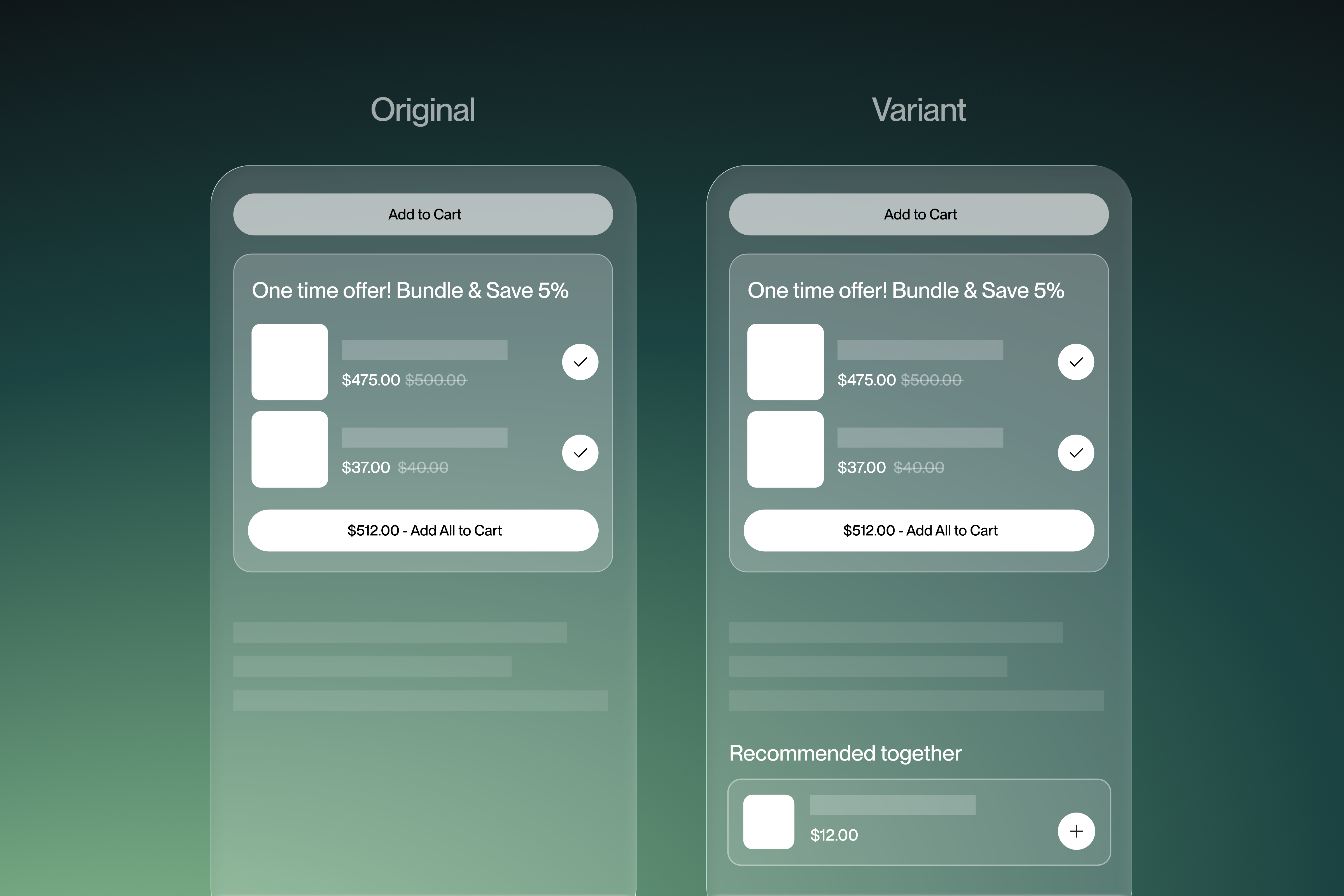
- Control: Bundles only
- Variant: Bundles + cross-sells
- Primary metric: Revenue per visitor (RPV)
- Sample size: 3,019 users
- Duration: 24 days
The Result
The assumption didn’t hold.
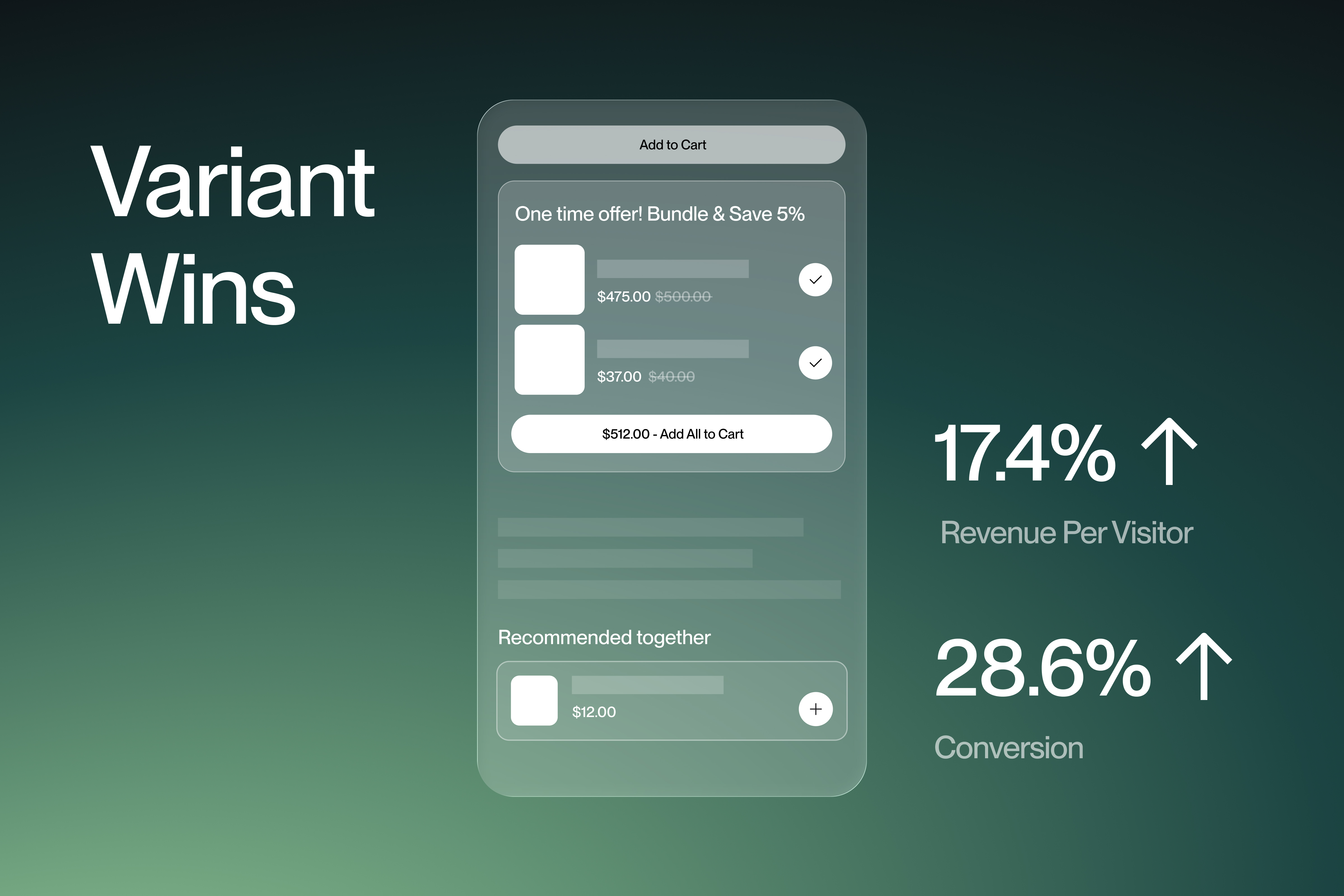
The variant won. Convincingly.
- +17.4% increase in RPV
- +28.6% increase in conversion rate
Adding cross-sells alongside bundles didn’t distract customers; it gave them more ways to say yes.
What Actually Happened
1. More choice didn’t hurt; it helped
Instead of overwhelming customers, the combination of bundles and cross-sells created multiple entry points to purchase:
- Bundles appealed to value-driven buyers
- Cross-sells supported discovery and exploration
Different behaviours, same outcome: more conversions.
2. AOV went down, but revenue went up
Counterintuitively, average order value decreased when cross-sells were introduced.
At first glance, that looks like a loss. It isn’t.
Higher conversion rate + broader product discovery = more total revenue per visitor.
This is a good reminder for Shopify merchants:
AOV is not the goal. RPV is.
3. Bundles did the heavy lifting
Post-test data showed that:
- Bundles drove a significant share of revenue, nearly half of Rebuy-attributed sales
- Orders including add-ons increased by approximately 5% after bundles were introduced
Bundles remain the strongest commercial lever, particularly when there’s a clear value incentive.
4. Cross-sells changed behaviour, even without clicks
Interestingly, PDP upsells didn’t show strong direct attribution.
But:
- Bounce rate decreased
- Product discovery increased
This suggests cross-sells were influencing how customers shopped, even if they weren’t always the final click.
What This Means for Shopify Merchants
Most stores think about this as an either/or decision.
It’s not.
Bundles and cross-sells serve different roles:
- Bundles convert intent into value
- Cross-sells expand consideration
When used together, they create a more complete buying journey.
The Practical Takeaways
If you’re running on Shopify and looking to improve revenue performance:
- Don’t be afraid of layering merchandising strategies
- Optimise for revenue per visitor, not just AOV
- Use bundles as your core commercial driver
- Use cross-sells to support discovery and reduce bounce
- Test placement, product pairing, and timing, not just presence
Where We’d Take This Next
This test opened up more questions than it answered — the good kind:
- Should you cross-sell complementary products or alternative ones?
- Is it more effective to upsell into a bundle versus a single product?
- Does behaviour change by product type or price point?
Our Conclusion
The idea that “too many offers hurt conversion” is outdated.
Customers don’t convert because the experience is simple.
They convert because the experience is relevant.
And when bundles and cross-sells are done well, they don’t compete.
They compound.